


Introduction
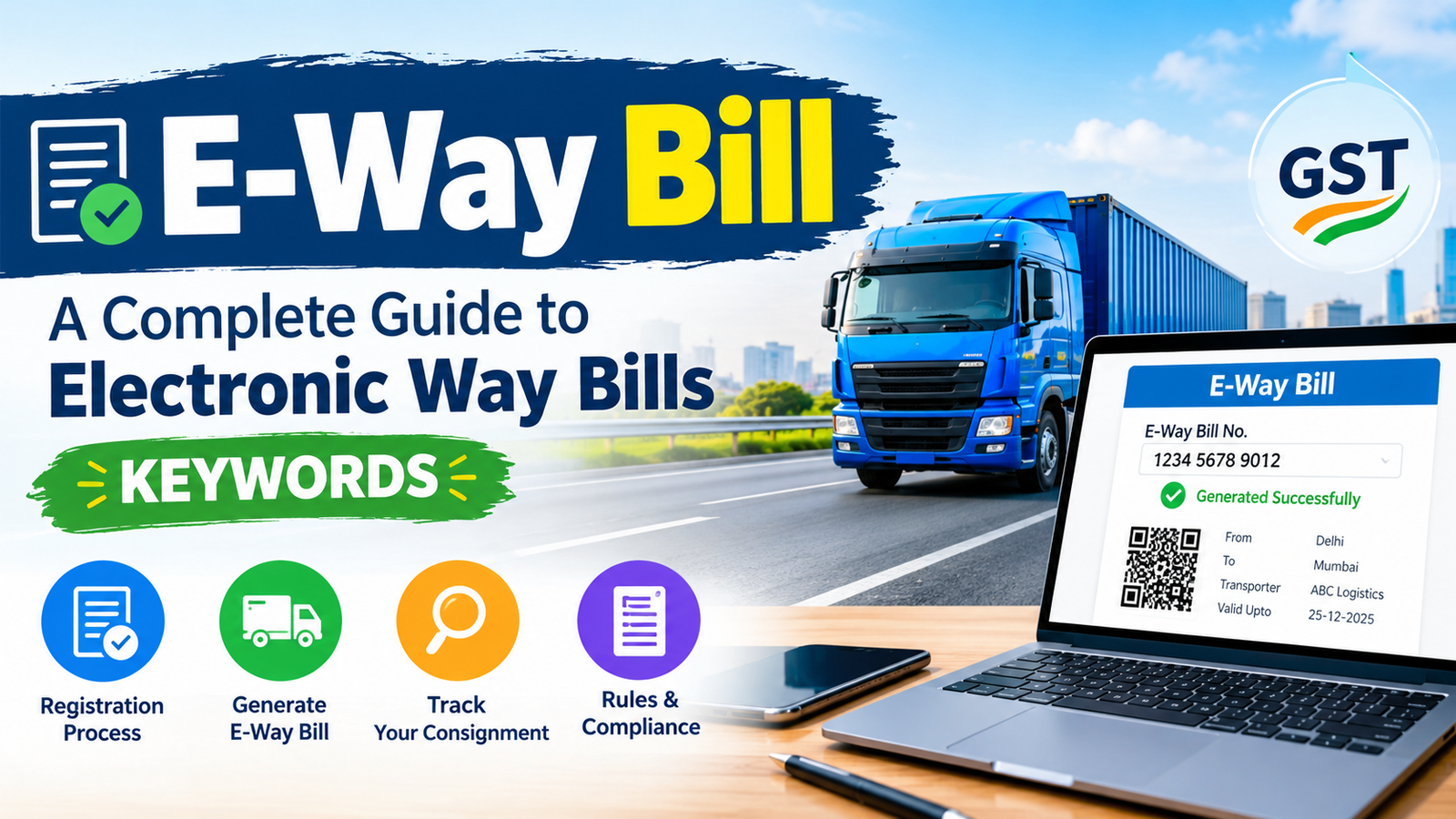
An E-Way Bill is an electronic document required for the movement of goods from one place to another. It plays an important role in the Goods and Services Tax (GST) system by helping tax authorities track the movement of goods and reduce tax evasion. The e-way bill contains important information about the goods, their value, the sender, the receiver, and the transporter.
Businesses involved in the supply, transportation, or delivery of goods need to understand how the e-way bill system works. It makes the transportation process more transparent and provides a digital record that can be checked by tax officials during transit.
In this article, we will explain what an e-way bill is, why it is important, how it is generated, its validity, and the common mistakes businesses should avoid.
What Is an E-Way Bill?
An e-way bill is an electronically generated document that is used to document the movement of goods. It is generally generated online before the transportation of goods begins when the applicable conditions are met.
The e-way bill includes details such as:
- GST identification details of the supplier
- GST identification details of the recipient
- Invoice or document number
- Value of the goods
- Description of goods
- Transporter details
- Vehicle number
- Place of delivery
- Distance to be covered
Once generated, an e-way bill receives a unique number that can be used to identify and verify the transaction.
Why Is an E-Way Bill Important?
The e-way bill system provides several benefits to businesses and tax authorities. One of its main purposes is to create a digital trail for the movement of taxable goods.
Some major benefits include:
- Better compliance: It helps businesses follow applicable GST transportation requirements.
- Reduced paperwork: Businesses can maintain transportation records electronically.
- Improved transparency: Authorities can verify the movement of goods more efficiently.
- Reduced tax evasion: Digital tracking makes it more difficult to transport goods without proper documentation.
- Faster transportation: A standardized electronic system can reduce unnecessary document-related delays.
- Easy verification: Authorized officials can verify e-way bill information during transit.
When Is an E-Way Bill Required?
The requirement to generate an e-way bill depends on the applicable GST rules, the value and nature of the goods, and the circumstances of transportation. In India, an e-way bill is generally required for the movement of goods exceeding the prescribed value threshold, subject to applicable rules and exemptions.
It may apply when goods are transported:
- In connection with a sale
- For a transfer between branches
- For a return
- For certain non-sale transactions
- For other specified purposes under GST rules
Businesses should check the current rules before transporting goods because requirements and exemptions can change.
Who Can Generate an E-Way Bill?
An e-way bill can generally be generated by the supplier, recipient, or transporter, depending on the circumstances of the transaction.
For example, a supplier may generate the e-way bill when goods are being dispatched to a customer. In some situations, the recipient or transporter may be responsible for completing the required information.
Transporters also play an important role when they are responsible for carrying goods from one location to another. They may need to update transportation-related details, including vehicle information.
How to Generate an E-Way Bill
Generating an e-way bill is primarily an online process. A business needs to provide accurate information about the transaction and transportation.
The general process involves the following steps:
- Log in to the official e-way bill system.
- Enter the required supplier and recipient details.
- Provide invoice or relevant document information.
- Enter the description and value of the goods.
- Provide transportation details.
- Enter the vehicle or transporter information where applicable.
- Submit the information.
- Generate the e-way bill.
- Keep the e-way bill number and related documentation available during transportation.
Before submitting the form, businesses should carefully check all details because incorrect information can create compliance problems.
Documents and Information Required
The information required to generate an e-way bill depends on the transaction and transportation method. Commonly required information includes the invoice, bill of supply, delivery challan, GST details, and transportation information.
Businesses should maintain accurate records of:
- Invoice number and date
- Product details
- Taxable value
- GST information
- Recipient address
- Transporter details
- Vehicle number
- Delivery location
Accurate documentation makes the process easier and helps avoid errors during inspections.
E-Way Bill Validity
An e-way bill has a prescribed validity period based on the distance that goods are required to travel and the applicable rules. The validity may also vary according to the type of vehicle or transportation involved.
Businesses should calculate the applicable validity carefully and ensure that the goods reach their destination within the permitted period. Delays caused by unforeseen circumstances may be handled according to the provisions and procedures available under the applicable GST rules.
Common E-Way Bill Mistakes
Businesses can face problems when e-way bill information does not match the actual transportation details. Some common mistakes include:
- Entering an incorrect vehicle number
- Providing an incorrect GST identification number
- Using the wrong invoice number
- Entering an incorrect product value
- Selecting the wrong transaction type
- Failing to update transportation details
- Allowing the e-way bill to expire
- Failing to carry the required documentation
Employees responsible for invoicing and logistics should verify information before dispatching goods.
E-Way Bill Cancellation and Updating
In certain situations, an e-way bill may need to be cancelled or its transportation details updated. The applicable rules determine when cancellation or modification is permitted.
For example, if goods are not transported or a transaction is cancelled, the business may need to take appropriate action within the permitted time. Similarly, if the vehicle changes during transportation, relevant details may need to be updated.
Businesses should always follow the current procedures and time limits prescribed by the tax authorities.
Benefits of the E-Way Bill System
The e-way bill system has modernized the way goods transportation is documented. It provides a centralized electronic record that can be accessed by authorized parties.
For businesses, the system can improve record management, reduce paperwork, and make transportation documentation more organized. For governments, it provides a mechanism for monitoring goods movement and improving GST compliance.
It also encourages businesses to maintain proper invoices and transportation records.
Tips for Managing E-Way Bills
Businesses can make e-way bill compliance easier by following a few simple practices:
- Verify invoice information before generating the e-way bill.
- Double-check the vehicle number.
- Train accounting and logistics employees.
- Keep copies or records of relevant documents.
- Monitor e-way bill validity.
- Update transportation information when required.
- Regularly check for changes in GST rules.
- Reconcile e-way bills with invoices and accounting records.
Using accounting or GST-compliant software can also help businesses organize their transportation and tax records.
Conclusion
The e-way bill is an important part of the GST compliance framework for the movement of goods. It provides an electronic record of transportation and helps businesses and tax authorities maintain greater transparency.
For businesses, generating an e-way bill is not simply a documentation task. Accurate information, timely generation, correct transportation details, and proper record keeping are essential for smooth operations. Errors in invoices, vehicle numbers, GST details, or validity can create unnecessary compliance issues.
By understanding the e-way bill process and regularly checking the latest applicable GST requirements, businesses can reduce mistakes and make their goods transportation process more efficient and compliant.
